
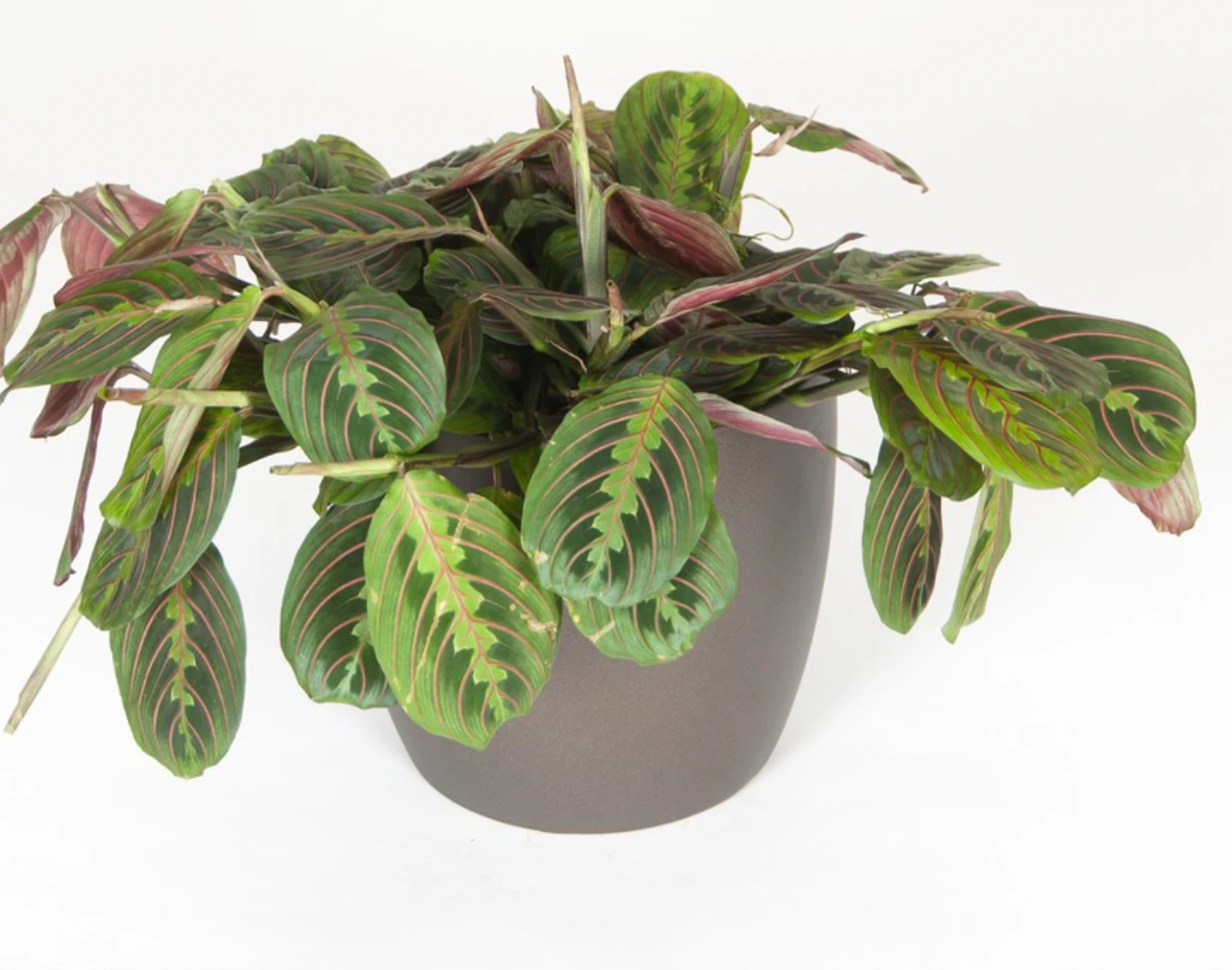
Maranta Red Prayer Plant
Original price was: $16.00.$11.20Current price is: $11.20.
- 100% Quality Satisfaction
- Unbeatable Quality, Unbeatable Value
- Free Shipping Worldwide
- Buy quality, buy with us.

The Maranta genus encompasses several species of evergreen, rhizomatous plants commonly known as prayer plants. This plant is the classic red-veined form of the Maranta leuconeura.
Description:
Foliage: Maranta plants are known for their attractive foliage, featuring intricate patterns and vibrant colors. The leaves are often oval-shaped with unique patterns of variegation, including shades of green, red, and cream.
Movement: One distinctive characteristic of prayer plants is their ability to fold their leaves upward at night, resembling praying hands, hence the name “prayer plant.”
Size: Depending on the specific variety, Maranta plants typically reach a height of about 6 to 12 inches, making them well-suited for indoor spaces.
Care Tips:
Light: Maranta plants prefer bright, indirect light. Avoid exposing them to direct sunlight, as it can scorch the leaves. They thrive in the dappled light conditions found in their native tropical understory habitats.
Temperature and Humidity: Maintain a warm and humid environment. Ideal temperatures range from 65-75°F (18-24°C). These plants appreciate high humidity levels, so consider misting the leaves or using a humidity tray.
Watering: Keep the soil consistently moist but not waterlogged. Water when the top inch of soil feels slightly dry. Use room-temperature water, and avoid allowing the soil to dry out completely. Overwatering can lead to root rot.
Soil: Use a well-draining, peat-based potting mix. This helps maintain the necessary moisture levels while preventing waterlogged conditions.
Fertilizing: During the growing season (spring and summer), feed the plant with a balanced liquid fertilizer every 4-6 weeks. Reduce or eliminate fertilization during the fall and winter when the plant’s growth slows down.
Pruning: Prune the plant as needed to remove yellow or damaged leaves. Regular pruning helps maintain the plant’s shape and appearance.
Repotting: Repot your Maranta every 1-2 years, or when it outgrows its current container. Spring is generally a good time for repotting.
Propagation: Maranta plants can be propagated through division. When repotting, carefully separate the rhizomes, ensuring each division has roots attached.
By providing the right conditions of light, water, and humidity, you can enjoy a healthy and thriving Maranta prayer plant. Keep in mind that specific care requirements may vary slightly depending on the exact species or cultivar you have.
| Pot Size (Diameter) | 4 Inch, 6 Inch |
|---|
Be the first to review “Maranta Red Prayer Plant”
Related products
Classic House Plants
Classic House Plants
Classic House Plants
Classic House Plants

Classic House Plants
Classic House Plants
Classic House Plants
Classic House Plants
Reviews
There are no reviews yet.